

Hydrodynamic Energy Saving Devices | |
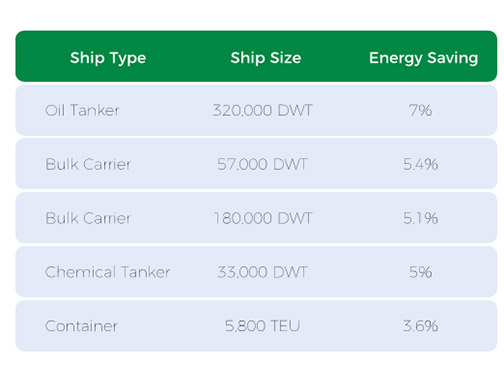
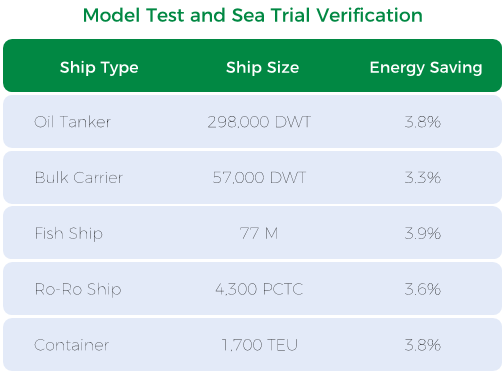
Advantage SS-PSF: Pre-swirl Fairing SS-BCF: Boss Cap Fin SS-RB: Rudder Bulb SS-HEP: High-Efficiency Propeller SS-PT: Propeller Trimming Energy-saving effect could reach 5%~20% through installing the energy-saving devices under the designed ship speed and loading condition |
|
ESDs & Service Scope
|
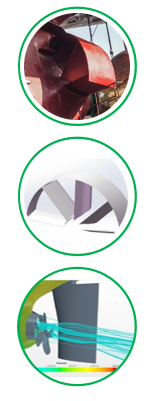
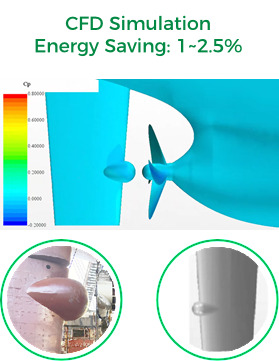
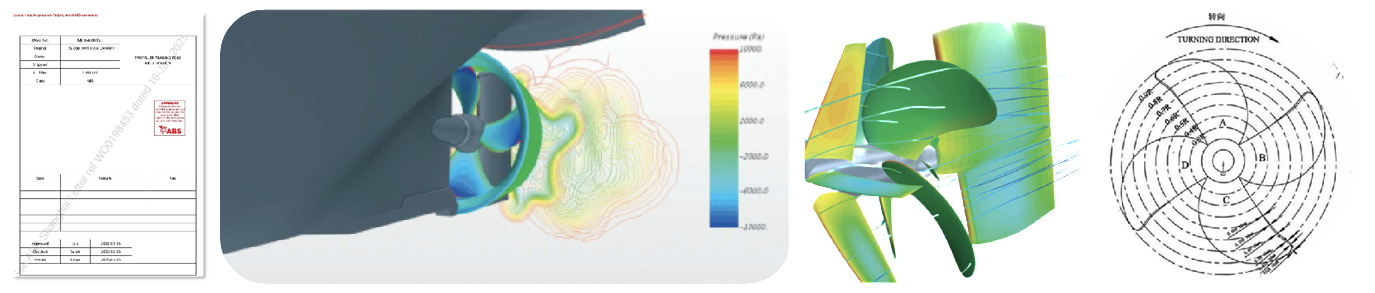
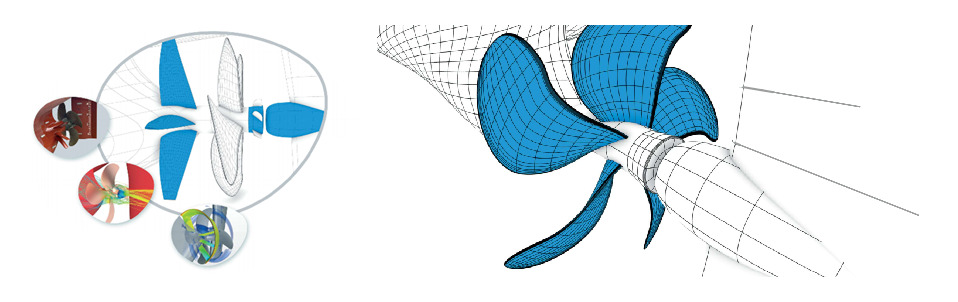
| SinoShaft - Hydrodynamic ESDs SS-PSF (Pre-swirl Fairing): A pre-positioned hydrodynamic energy saving device composed of guide vanes and a duct. Installed directly ahead of the propeller with its axis offset above the propeller shaft, it incorporates 4~5 bladed guide vanes to generate pre-rotational flow. The outer duct improves the uniformity of the inflow to the upper half-plane of the propeller and reduces rotational energy loss in the propeller wake. Energy Saving Mechanism: Produce thrust by duct Produce pre-swirled inflow to propeller by pre-swirl vanes and reduce rotational loss in propeller slipstream Improve propeller efficiency by equalizing inflow and increasing the flow velocity towards the propeller Suppress the flow separation near the stern, and then recover the pressure on the surface of the stern. |
|
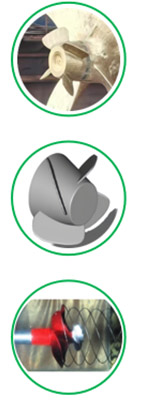
| SinoShaft - Hydrodynamic ESDs SS-BCF (Boss Cap Fin): A hydrodynamic energy saving device for marine propulsors that adds small blades (equal in number to the propeller blades) to the propeller boss cap, aiming to eliminate energy loss from propeller hub vortices. Energy Saving Mechanism: Rectify the strong downstream from propeller blade trailing edge and break up the hub vortex. Increase the pressure on the end of cap and root of propeller Reduce the torque and increase the thrust of propeller. |
SinoShaft - Hydrodynamic ESDs SS-RB (Rudder Bulb): A device that disrupts hub vortices, restores pressure on the rudder bulb and rudder surface, and reduces rotational energy loss in the wake. Energy Saving Mechanism: The rudder bulb fills the space behind the propeller, helping reduce the low-pressure zone along the propeller axis. Enhances the rudder’s flow-straightening effect, reducing the propeller’s circumferential induced velocity and improving circumferential induction efficiency. Increases the uniformity of the wake field at the propeller disk, which benefits propeller performance in terms of cavitation, vibration excitation, and other factors. The presence of the rudder bulb reduces or even eliminates the hub vortex formed behind the propeller, thereby decreasing viscous resistance caused by the propeller hub. |
|
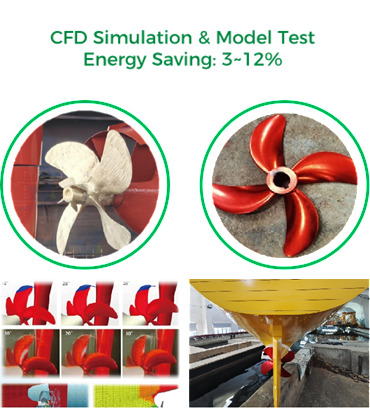
SinoShaft - Hydrodynamic ESDs SS-HEP (High-Efficiency Propeller): A customized device designed on an integrated R&D platform based on shipowners’ personalized navigation requirements. It features ultra-high propulsion efficiency, highly synergistic with hydrodynamic energy-saving devices, and delivers significant energy-saving and environmental protection effects. HEP Optimization: Optimal diameter, blades number, area ratio, etc. Optimal radial load distribution and New foil section Optimal skew and rake Trade off design among efficiency, cavitation and strength Self-developed Design and Simulation Software √ Wake-adapting design √ Hydrodynamic performance prediction √ Automatic meshing √ Cavitation/Fluctuating pressure simulation √ Strength check/FE analysis √ New section for delaying cavitation √ Drawings for manufacturing |
|
SinoShaft - Hydrodynamic ESDs
SS-PT (Propeller Trimming):
Propeller trimming is primarily performed to increase the Light Running Margin (LRM) of the propeller. Many older vessels currently operate at reduced speeds (EPL), resulting in very low or even negative LRM. The installation of energy-saving devices like ducts further reduces this margin. Trimming the propeller helps restore the LRM, allowing the vessel to return to the optimal engine-propeller matching point.
The Light Running Margin (LRM) of a marine propeller refers to the difference between the propeller’s actual rotational speed and its designed rotational speed under specified operating conditions. It reflects the propeller’s ability to adapt its rotational speed during low-load or light-load scenarios.
The Light Running Margin is a critical parameter in propeller design. It ensures efficient operation under low-load conditions, protects the main engine, and improves vessel maneuverability.
Shaft Generator System ( Fuel Oil Saved : 2% to 3% M.E DFOC)
Shaft generators could improve vessel's energy efficiency and reduce emissions which is driven by the main engine supply power to the vessel's main switchboard by converting variable voltage and frequency input to fixed voltage and frequency output.
Ocean going vessels such as containers, bulk carriers, tankers,car carriers etc. are usually powered by high-efficiency two-stroke low-speed diesel engines, reducing fuel consumption and emissions are the directions of continuous improvement of their power systems.
PTO of operating vessels is regarded as a beneficial solution to EPL and CII ratings for many shipowners.
5F, Building 2, No.6400 East Yinggang Road, Qingpu District, Shanghai, China
Tel.: Mr. Zale Zhang: +86 137 7443 8789
Email: sales@sinoshaft.com